Why You Keep Skipping Your Meditation Cushion — And What That Avoidance Is Trying to Tell You

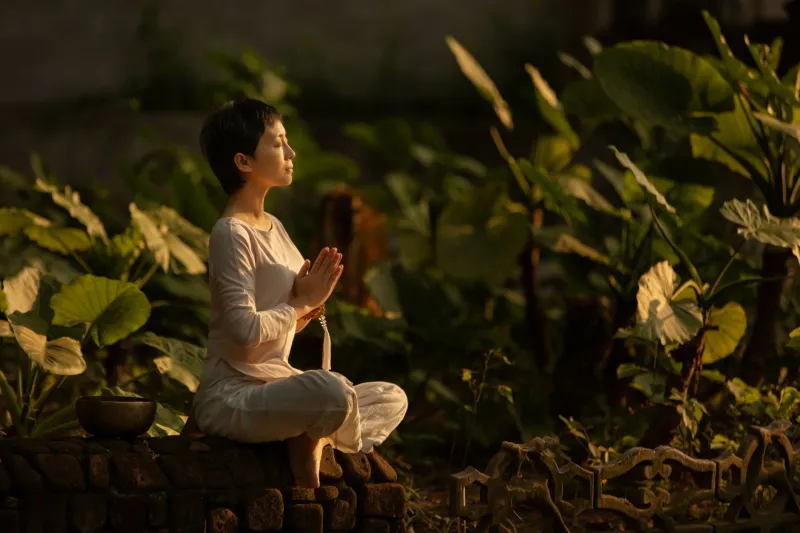
Photo by Photo by Amrut Roul on Unsplash on Unsplash
You set the alarm ten minutes early. You placed the cushion by the window the night before. You had every intention. And yet, by morning, you were scrolling through your phone, refreshing email, or suddenly convinced that the kitchen needed cleaning before anything else could happen.
Sound familiar?
If you have ever committed to a meditation practice only to find yourself engineering elaborate detours around it, you are not broken. You are, in the language of contemplative tradition, receiving instruction. The monks understood this long before neuroscience had a name for it: resistance is not the enemy of practice. It is, quite often, the practice itself.
The Monastery Has Always Known About This
In Benedictine communities, novice monks are not simply handed a schedule and expected to comply. Their formation includes extended periods of discernment — structured reflection on the interior movements that arise when a person encounters silence, stillness, and self-examination for the first time. Spiritual directors in these traditions speak of acedia, a Greek term sometimes translated as spiritual sloth but more precisely understood as a kind of restless aversion to the present moment. It was considered so significant that the Desert Fathers named it among the primary obstacles to contemplative life.
What is striking is how precisely this ancient concept maps onto the modern experience of meditation avoidance. Acedia does not look like laziness from the outside. It looks like productivity. It looks like a full calendar, a reorganized inbox, a sudden and urgent interest in tasks that have waited weeks. The person suffering from acedia is rarely idle. They are simply doing everything except the thing that would require them to sit with themselves.
This is the first revelation your resistance offers: avoidance is almost never about time.
Resistance as Diagnostic Data
Contemporary psychology has arrived, by a different route, at a similar understanding. Research in acceptance and commitment therapy suggests that experiential avoidance — the tendency to suppress or escape uncomfortable internal states — is among the strongest predictors of psychological suffering. We do not avoid meditation because we are busy. We avoid it because some part of us anticipates that sitting quietly will surface something we have been successfully outrunning.
Rather than treating this as a problem to overcome through sheer willpower, consider approaching it as a clinician might approach a symptom: with curiosity rather than judgment.
Ask yourself: When I imagine sitting down to meditate right now, what is the first sensation I notice in my body? Many practitioners report a tightening in the chest, a low hum of dread, or an almost physical urge to stand up. These are not signs that meditation is wrong for you. They are the very data points that make meditation valuable.
The Zen tradition speaks of don't-know mind — a beginner's openness to whatever arises. Applied to resistance, this means treating your avoidance not as an obstacle to clear away but as a question worth sitting with: What is it that I am so reluctant to encounter?
The Three Most Common Patterns — And What They Reveal
The Perfectionist's Trap. Many practitioners, particularly high-achievers, avoid meditation because they fear doing it wrong. They read about proper posture, correct breath ratios, and the neurological benchmarks of deep practice — and then decide they are not ready yet. This pattern often reveals a deeper relationship with performance and approval. The cushion becomes another arena for self-evaluation, and the ego, unwilling to be graded on silence, quietly engineers its own absence.
Monastic novices encounter a version of this when they compare their interior experience to the apparent serenity of senior brothers or sisters. The counsel they receive is consistent across traditions: Your practice is not their practice. Sit with what is actually here.
The Grief Avoider. For some practitioners, resistance intensifies during periods of loss, transition, or unresolved emotion. Silence, in these seasons, feels genuinely dangerous — as though stillness might open a door that cannot easily be closed again. This is, in fact, an accurate intuition. Meditation does not manufacture emotion; it removes the background noise that keeps existing emotion at bay.
If you notice that your avoidance spikes during difficult life chapters, consider that your practice may be asking you to grieve something you have not yet permitted yourself to grieve. This is not a reason to avoid the cushion. It is the most urgent reason to return to it — gently, and perhaps with the support of a skilled teacher or therapist.
The Meaning-Seeker's Doubt. A third pattern appears among practitioners who have been meditating for some time without experiencing the dramatic shifts they anticipated. The resistance here is more philosophical: What is the point? This form of avoidance often signals a need to revisit one's foundational motivation for practice — what the Buddhist tradition calls intention-setting and what Christian contemplatives might frame as the renewal of one's orientation toward God.
Asking why you began is not a detour from practice. It is, frequently, the deepest practice available.
Working With Resistance Rather Than Against It
The monastic insight that has perhaps the most practical application for contemporary practitioners is this: the obstacle and the path are not separate things. What stands between you and your cushion is not a problem to be eliminated before practice can begin. It is the material of practice itself.
A few approaches that honor this understanding:
Shrink the commitment. If ten minutes feels impossible, commit to two. Not as a trick to eventually get to ten, but as a genuine recognition that two minutes of honest sitting is infinitely more valuable than ten minutes of elaborate avoidance. Many contemplative teachers suggest that the act of sitting down — even for a single conscious breath — constitutes a complete practice on a difficult day.
Name the resistance aloud. Before you sit, speak plainly to yourself about what you are experiencing. I notice that I do not want to do this right now. I notice a tightening in my shoulders. I am sitting anyway. This simple act of naming shifts the relationship from unconscious avoidance to conscious engagement.
Keep a resistance journal. After each session — whether you sat for the full duration or abandoned the attempt — write two or three sentences about what arose. Over time, patterns will emerge that reveal far more about your interior life than any single session could.
Seek community. The monastery is not incidental to contemplative practice. It is structural. Human beings are more likely to show up when others are showing up alongside them. Whether through a local meditation group, a weekly online gathering, or simply a friend who texts to ask whether you sat this morning, accountability is not a crutch. It is wisdom.
The Mirror Does Not Lie
There is a reason the monastic traditions have endured for centuries while countless self-improvement systems have faded: they do not promise that the interior life will be comfortable. They promise that it will be true.
Your resistance to meditation is a mirror. It reflects the parts of your life that have not yet been examined, the grief that has not yet been honored, the identity that has not yet been questioned. You are not failing when you look away. But you are missing an extraordinary opportunity.
The cushion will be there tomorrow. So will the mirror. The only question is whether you are ready — not to be perfect, but to be honest.