Enough Is a Practice: What Monastic Constraints Teach Us About Living Well in an Age of Infinite Options

There is a word that rarely appears in American wellness culture: enough. Our productivity apps promise unlimited focus. Our self-help shelves overflow with frameworks for boundless growth. Our social media feeds present an endless horizon of aspirational lives to compare against our own. We have engineered a civilization of infinite options and, paradoxically, we are exhausted by it.
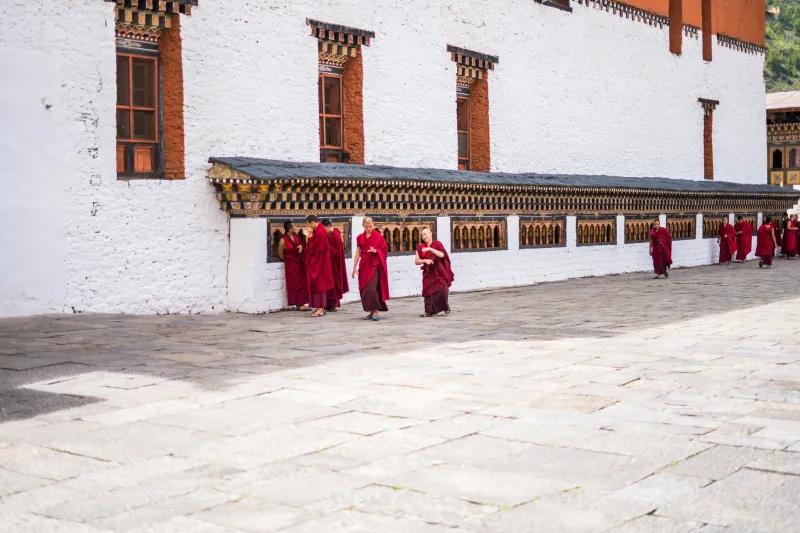
Meanwhile, in monasteries across the country and around the world, men and women have been living within strict, deliberate constraints for centuries—and thriving. Fixed schedules. Shared meals. Confined spaces. Minimal possessions. Regulated speech. To the outside observer, such a life might appear impoverished. But a closer examination reveals something that modern wellness culture has largely forgotten: limitation, practiced with intention, is not the enemy of flourishing. It is frequently its source.
The Paradox of Unlimited Choice
Psychologist Barry Schwartz popularized the concept of the "paradox of choice" in the early 2000s, arguing that an excess of options does not liberate us but paralyzes and depletes us. The research behind this idea has been debated in the years since, but the experiential reality it describes is difficult to dismiss. Ask anyone who has spent forty-five minutes scrolling a streaming service without watching anything, or who has abandoned an online shopping cart because the number of nearly identical products became overwhelming.
Monastic communities solved this problem long before behavioral economics gave it a name. The Rule of Saint Benedict, written in sixth-century Italy and still governing Benedictine life today, is, among other things, a masterwork of constraint design. It specifies when monks rise, when they pray, when they eat, what they eat, how much they may own, and how they are to treat one another. The Rule does not present these parameters as burdens. It presents them as the architecture of a free life.
The distinction is worth sitting with. A monk does not spend cognitive energy deciding whether to attend Lauds at dawn. The question has already been answered by the Rule. That released attention does not disappear—it is redirected toward depth of presence within the practice itself. Constraint, in this framing, is not subtraction. It is a form of gift.
Scarcity as Spiritual Technology
In the desert traditions of early Christian monasticism—those stark communities that emerged in Egypt and Syria in the third and fourth centuries—the physical environment was itself a teacher. The desert offered almost nothing: little water, little shade, little company, little stimulation. The early monastics did not flee this scarcity. They sought it deliberately, understanding that the stripping away of comfort and novelty forced a confrontation with what actually remained.
What remained, they discovered, was the self—and, for those with the patience to sit with it, something deeper than the self.
This is not merely ancient religious sentiment. Contemporary neuroscience offers a secular echo of the same insight. Research on creativity consistently shows that constraints can enhance rather than inhibit original thinking. When resources are limited, the brain is pushed toward novel recombinations and unexpected solutions. Abundance, by contrast, can encourage a kind of cognitive laziness—why work harder when there is always another option?
The monastery does not wait for scarcity to arrive. It engineers it. And in doing so, it creates the conditions for a quality of attention and ingenuity that unconstrained environments rarely produce.
Fixed Rhythms and the Relief of Predictability
One of the most underappreciated sources of burnout in contemporary American life is not overwork alone but the relentless demand for self-direction. When everything is negotiable—when every hour is a blank canvas requiring fresh decisions about how to fill it—the psychological cost compounds quietly over time. Decision fatigue is real, and it does not discriminate between trivial choices and meaningful ones.
Monastic schedules address this directly. The canonical hours—those fixed intervals of prayer that punctuate the monastic day from Vigils before dawn to Compline at nightfall—do not merely organize time. They relieve the practitioner of the burden of organizing it themselves. The day arrives pre-structured. The monk's task is not to design the container but to inhabit it fully.
For Americans accustomed to treating every hour as an optimization opportunity, this can feel, at first, like a loss of autonomy. But practitioners who have spent time in monastic environments—whether as permanent members or as retreat guests—frequently report the opposite experience. The fixed rhythm does not feel confining. It feels, unexpectedly, like rest.
This is the monastery's quiet argument against burnout: that sustainability comes not from doing less of everything but from releasing the exhausting project of endless self-curation.
Confined Space and the Depth It Demands
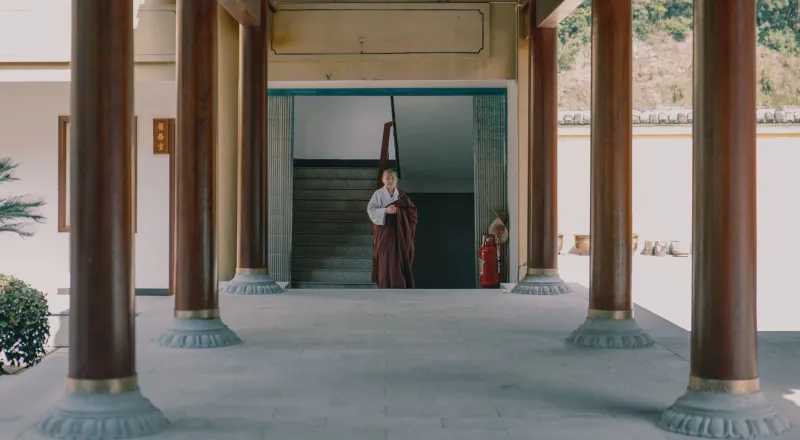
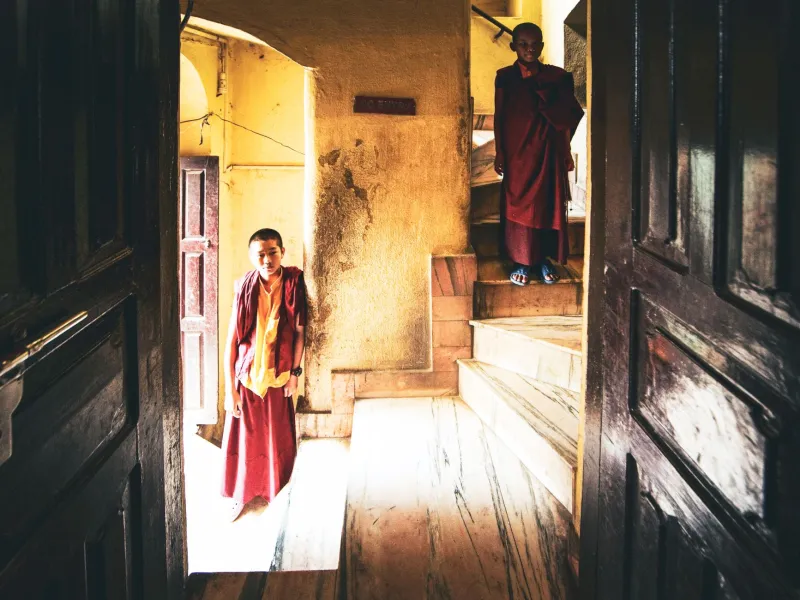
Physical space in a monastery is deliberately modest. A monk's cell—the small, spare room that serves as personal quarters—contains what is necessary and little more. A bed. A desk. Perhaps a small shelf for books. A window, if the tradition allows it.
This is not austerity for its own sake. It is an understanding, refined over centuries, that the quality of inner life expands in inverse proportion to the clutter of outer life. When the room offers nothing to distract, the inhabitant is returned again and again to the present moment—to the quality of light through the window, to the texture of silence, to the movements of thought and feeling that a more stimulating environment would drown out.
The same principle applies beyond the cell walls. Monastic communities are typically small. Social relationships are limited in number but—by necessity and by intention—cultivated with considerable care. There is no option to simply find a new community when the existing one becomes difficult. The constraint of staying, of working through friction rather than escaping it, produces a depth of human relationship that transient, choice-saturated social lives rarely achieve.
Designing Constraints Into a Modern Life
None of this requires entering a monastery, though for those drawn to that path, the invitation is worth considering. What it does require is a willingness to treat limitation not as a problem to be solved but as a practice to be undertaken.
This might mean establishing fixed times for meals, for sleep, for digital silence—and honoring those boundaries even when the algorithm offers something more compelling. It might mean reducing a wardrobe to what is genuinely used, or committing to a single creative project rather than maintaining a scattered portfolio of half-begun endeavors. It might mean staying in a neighborhood, a relationship, a spiritual practice long enough to discover what lies beneath the surface that novelty always obscures.
The monastic traditions do not romanticize constraint. They are clear-eyed about its difficulty. But they are equally clear about its fruits: a quality of attention, a depth of contentment, and a resilience against burnout that the pursuit of unlimited options has never reliably produced.
The Discipline of Enough
There is a moment in contemplative practice—familiar to anyone who has sat in silence long enough—when the restless search for something better simply stops. Not because the practitioner has found the perfect object of attention, but because the searching itself has quieted. What remains is presence. And presence, it turns out, is sufficient.
The monastery has always known this. The rest of us are still learning it.
The practice of enough is not a resignation. It is a form of radical attention—a decision to go deeper into what is already here rather than wider into what might be found elsewhere. In an age of infinite options and epidemic burnout, that may be the most countercultural—and the most healing—discipline available to us.