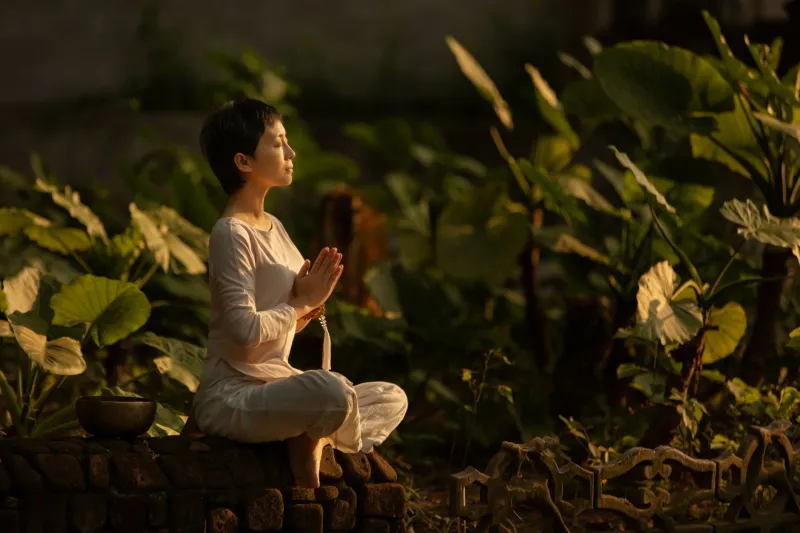
Sacred Space at Home: Designing Your Own Monastic Cell for Daily Contemplative Practice
In the sixth century, Saint Benedict wrote with surprising specificity about the arrangement of monastic life. He understood, as contemplatives across traditions have long understood, that environment is not incidental to practice—it is inseparable from it. The cell, that spare and deliberate room assigned to each monk, was never merely a place to sleep. It was a carefully considered vessel for interior work.
For most Americans today, the idea of a dedicated contemplative space exists somewhere between aspiration and impossibility. Homes are loud. Devices are omnipresent. Square footage is expensive. And yet the monastic insight endures: where we place ourselves physically shapes what becomes possible mentally and spiritually. The good news is that you do not need a cloister to honor this principle. You need intention, a few deliberate choices, and a willingness to protect what you create.
What the Monastic Cell Can Teach Modern Dwellers
The traditional monastic cell was defined less by what it contained than by what it excluded. A simple bed. A writing surface. Perhaps a small icon or devotional object. The absence of clutter was not aesthetic minimalism in the contemporary sense—it was theological. Distraction was understood as the enemy of recollection, and recollection was the very purpose of the contemplative life.
This framework translates with remarkable directness into the modern home. Neuroscience now confirms what monastics knew experientially: a visually complex environment activates the brain's threat-detection systems, elevating cortisol and fragmenting attention. Conversely, spaces characterized by simplicity, natural materials, and low sensory stimulation support the parasympathetic nervous system—the physiological state most conducive to meditation, prayer, and deep reflection.
When you begin designing your domestic sanctuary, the monastic cell offers a useful template. Begin with subtraction rather than addition.
Choosing and Preparing the Space
Not every home contains an obvious candidate for a dedicated contemplation room. Many practitioners work with corners, alcoves, or partitioned sections of larger rooms. What matters more than square footage is consistency and commitment. The space you return to daily begins to hold a kind of psychological charge—your nervous system learns to downregulate simply upon entering it.
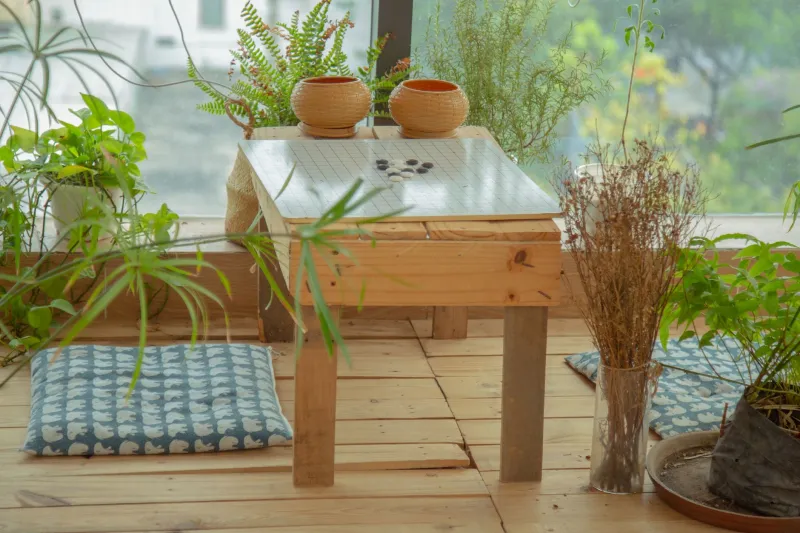
Wherever possible, choose a location with natural light and, ideally, a view of something living: a tree, a garden, even a potted plant on a windowsill. Research on attention restoration consistently points to natural environments as particularly effective in replenishing cognitive resources. If outdoor views are unavailable, a single well-tended plant can serve a meaningful symbolic and physiological function.
Once the location is identified, the work of simplification begins. Remove everything that does not serve stillness. This is not a decorating project—it is an act of discernment. Surfaces should be clear. Visual complexity should be minimal. If the space must serve dual purposes in a smaller home, consider a lightweight room divider or a simple curtain that can be drawn to signal the transition into contemplative time.
The Technology Boundary: A Non-Negotiable Threshold
Perhaps the most significant departure from standard home design that a contemplative space requires is the deliberate exclusion of digital technology. Smartphones, tablets, laptops, and televisions do not belong in this space—not during practice, and ideally not at all. This is not a punitive restriction but a recognition of how these devices function neurologically.
The mere presence of a smartphone on a desk, even face-down and silenced, has been shown in peer-reviewed research to reduce available cognitive capacity. The brain allocates attentional resources to the possibility of notification, even when the device is unused. A true sanctuary cannot coexist with this ambient pull.
Establishing a clear technology threshold—a physical boundary beyond which devices are not carried—creates a powerful behavioral cue. Many practitioners find it useful to leave devices in a designated location outside the space before entering. Over time, this ritual of separation becomes part of the practice itself, signaling to the mind that a different quality of attention is now being invited.
Sensory Optimization: Sound, Scent, and Surface
Monastic traditions across cultures have employed sensory elements with great intentionality. Incense in Buddhist and Catholic practice. Bells in Zen monasteries. Beeswax candles in contemplative Christian communities. These are not decorative choices—they are carefully calibrated sensory anchors that help practitioners transition from ordinary consciousness to a more recollected state.
In your home sanctuary, consider each sensory dimension deliberately. For sound, silence is the primary goal, but acoustic challenges in American homes are real. A white noise machine placed just outside the space can mask household and street noise without introducing stimulating content. If music is used, choose instrumental pieces without lyrics, or recordings of natural soundscapes. Tibetan singing bowls, struck at the beginning and close of a session, serve the same orienting function as monastery bells.
For scent, a single consistent fragrance—sandalwood, frankincense, or cedarwood are common contemplative choices—can become a powerful olfactory anchor. The olfactory system has a uniquely direct pathway to the limbic brain, which governs emotional regulation and memory. Using the same scent consistently within your practice space accelerates the conditioned response of calm.
For surfaces and textures, prioritize natural materials wherever possible. Wood, stone, linen, and wool engage the senses in ways that synthetic materials do not. A simple meditation cushion or kneeling bench placed on a natural fiber rug creates a physical anchor for the body and a clear signal about the posture and intention of the time spent there.
The Psychological Architecture of Return
What distinguishes a contemplative space from a merely quiet corner is the quality of return. Monastics do not simply inhabit their cells—they return to them, again and again, across years and decades. This repetition is itself a form of practice. The space becomes saturated with the accumulated intention of all the sessions held within it.
For practitioners in the American context, where daily schedules are often fragmented and domestic life is rarely structured around spiritual rhythm, the act of returning to a dedicated space introduces an anchor of consistency. Research on habit formation suggests that environmental cues are among the most powerful drivers of behavioral regularity. When your body learns that a particular corner of your home means stillness, the mind begins to cooperate with far less effort.
Begin modestly. Even fifteen minutes each morning in a well-prepared space will, over weeks and months, produce measurable shifts in attention, stress response, and a general orientation toward contemplative awareness. The domestic monastery does not require vows or robes. It requires only the decision to treat one corner of your life as genuinely sacred—and then to protect that decision with the same care that Benedict's monks protected their silence.
The cell awaits. The practice is yours to begin.