
Introduction
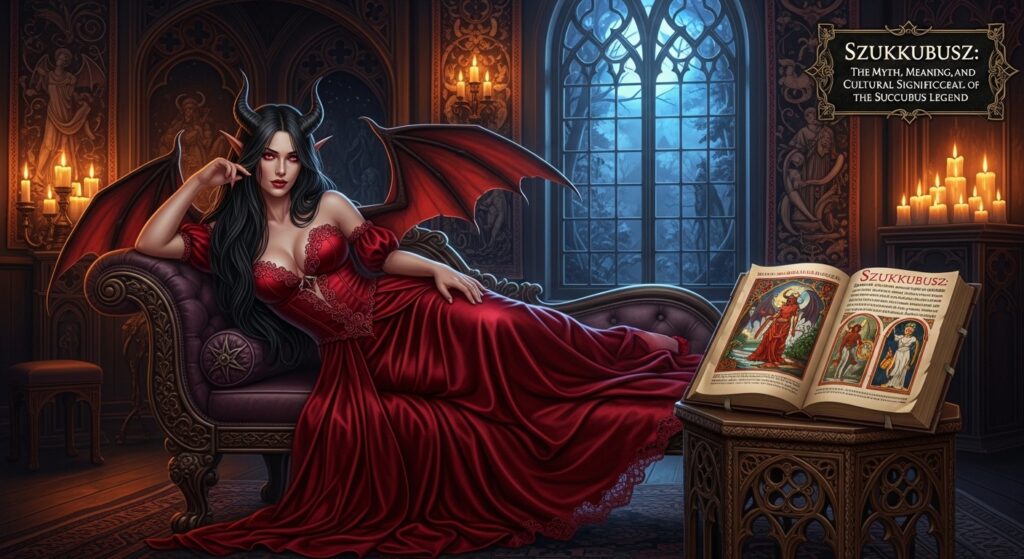
The term Szukkubusz — derived from the Latin word succubare, meaning “to lie beneath” — refers to a succubus, a female demon or supernatural entity that appears in dreams or legends to seduce men. Originating from medieval European folklore, the legend of the Szukkubusz has evolved over centuries, shifting from a terrifying symbol of temptation and sin to a complex figure representing desire, empowerment, and mystique.
In this article, we’ll explore the origins, mythology, symbolism, and modern interpretations of the Szukkubusz — and why this ancient legend continues to fascinate people today.
Origins of the Szukkubusz Myth
The earliest mentions of entities resembling the Szukkubusz date back to ancient Mesopotamian mythology, where female demons such as Lilitu or Lamashtu were believed to prey on men and infants. Over time, these figures evolved into what medieval Christian scholars described as succubi — demonic beings who visited sleeping men, drawing energy from their vitality or lust.
In Christian demonology, the Szukkubusz was often portrayed as a manifestation of temptation and moral weakness. The Church used this image to warn believers against sexual immorality and “sinful dreams,” interpreting them as visits from seductive spirits. In contrast, some folk traditions saw these beings as symbols of the mysterious and uncontrollable power of female sexuality.
The Role of the Szukkubusz in Folklore
In European folklore, the Szukkubusz was described as a beautiful woman who appeared at night, often in dreams or in human form, to engage in intimate acts with unsuspecting men. However, beneath her alluring appearance lay a dark purpose — she would drain the man’s life force, leaving him weakened or ill upon waking.
Legends claimed that the Szukkubusz could transform her shape to appear irresistible to her chosen victim, using beauty and charm as her weapons. Some tales even suggested that she gathered the essence of her victims to produce demonic offspring or to increase her own supernatural power.
While these stories were intended as cautionary tales. They also reflected deeper psychological and cultural fears — especially around desire, control, and the consequences of forbidden pleasure.
The Symbolism of the Szukkubusz
The figure of the Szukkubusz carries rich symbolic meaning that has changed across time and culture:
1. Temptation and Sin
In religious traditions, the Szukkubusz represented temptation — the idea that lust and desire could lead a person away from virtue. This symbolism was especially strong in medieval Europe, where strict moral codes associated sexuality with sin.
2. The Power of Desire
Beyond the religious view, the Szukkubusz also symbolizes the irresistible nature of human desire. Her allure and beauty embody both the attraction and danger of passion — a reminder that pleasure and peril often coexist.
3. Feminine Power and Independence
Modern interpretations often view the Szukkubusz not as evil but as a symbol of female empowerment. She represents control over one’s own sexuality and independence from societal constraints.
Szukkubusz in Religion and Mythology
Throughout history, the Szukkubusz has appeared in various religious and mythological contexts:
- Judaism: The demon Lilith, believed to be Adam’s first wife before Eve, is often seen as the prototype of the succubus. She refused to be submissive, left Eden, and became associated with night spirits who seduced men.
- Christianity: The medieval Church described succubi as fallen angels or agents of Satan. They were said to collect human souls or corrupt the faithful through carnal temptation.
- Islamic and Middle Eastern Lore: Similar entities, such as qarinah or djinn, were thought to visit humans in dreams, forming spiritual attachments that could cause illness or exhaustion.
Despite these varying interpretations, the core idea remains consistent — a supernatural female being tied to dreams, desire, and spiritual energy.
The Szukkubusz in Literature and Art
Over the centuries, the Szukkubusz has inspired countless writers, painters, and musicians. In medieval manuscripts, she was often depicted as a warning figure. But by the 19th and 20th centuries, artists began to reinterpret her as a symbol of mystery and allure.
In Gothic literature, she appeared as a haunting presence — beautiful yet deadly. Modern fantasy, anime, and video games have continued this trend, portraying Szukkubusz characters as seductive but emotionally complex beings. These depictions explore themes of love, loneliness, and the struggle between darkness and desire.
The evolution of her image reflects society’s changing attitudes toward sexuality, morality, and female autonomy.
Psychological Interpretations
Beyond mythology, some psychologists and historians view the legend of the Szukkubusz as a reflection of human psychology. The concept of a nocturnal visitation aligns with sleep paralysis — a condition where a person is conscious but unable to move. Often accompanied by vivid hallucinations or sensations of pressure on the chest.
In ancient times, such experiences were interpreted as demonic encounters. The Szukkubusz myth may have emerged as a cultural explanation for these mysterious nighttime events.
Modern Relevance of the Szukkubusz
In today’s culture, the Szukkubusz has taken on new meanings. Rather than being purely a figure of fear, she has become an icon in fantasy media, literature, and even psychology discussions. Some see her as a metaphor for emotional energy exchange in relationships — the idea that attraction. And intimacy involve both giving and receiving energy.
In feminist reinterpretations, the Szukkubusz embodies confidence, autonomy, and sensuality without shame. She challenges outdated narratives that demonize female desire, reminding us that power and pleasure can coexist in healthy balance.
Conclusion
The legend of the Szukkubusz is one of the most enduring and multifaceted myths in human history. From its origins in ancient demonology to its modern reinterpretations in art and psychology, the Szukkubusz continues to captivate imaginations across the world.