Emptiness for Sale: What the Minimalist Aesthetic Gets Wrong About Monastic Simplicity
When the Cell Becomes a Mood Board
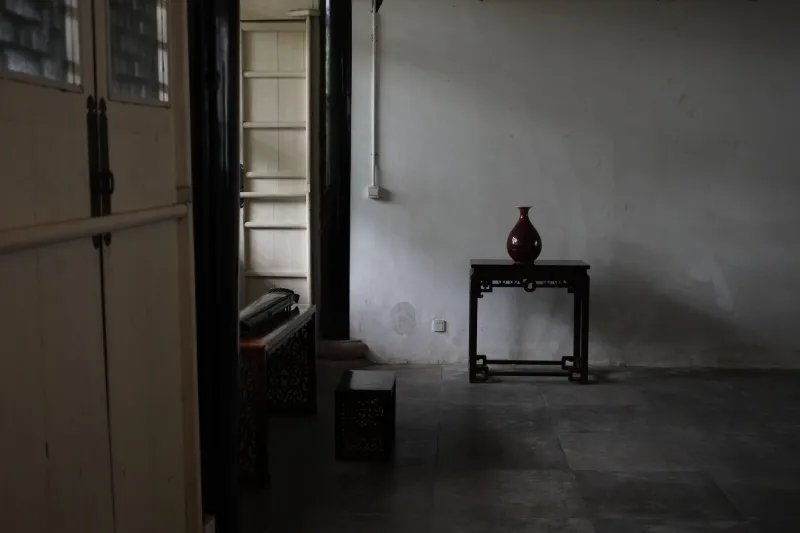
There is a particular kind of room that has come to dominate the aspirational imagination of American wellness culture. It contains very little: perhaps a low platform bed dressed in undyed linen, a single ceramic vessel on a windowsill, a floor of pale wood polished to a quiet glow. No clutter. No excess. The room breathes. It costs, depending on the zip code, somewhere between a modest fortune and an extraordinary one.
This aesthetic has a name — minimalism — and it has, in recent years, acquired the unmistakable quality of status. The empty room is no longer a sign of poverty or austerity. It is a signal of discernment. To own less, visibly and beautifully, is to announce that one has moved beyond the anxious accumulation of the merely wealthy into the serene sufficiency of the truly refined.
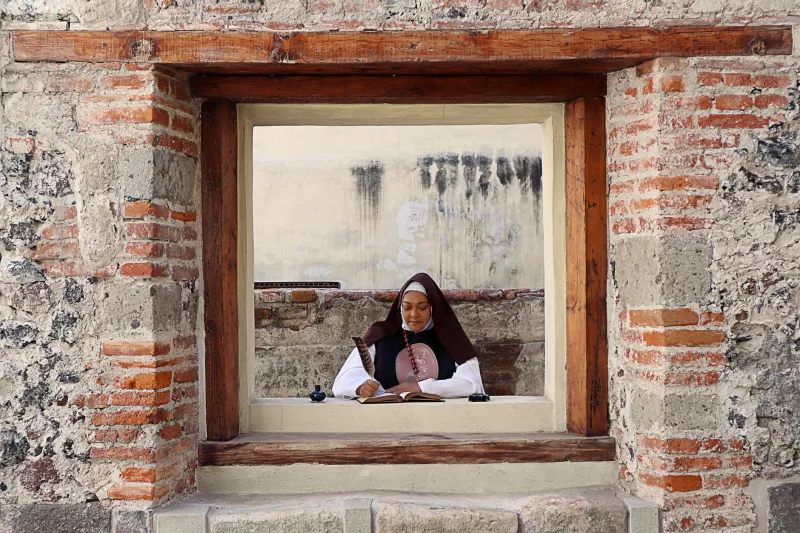
What is rarely acknowledged in these conversations is where this visual language originated. The bare cell. The whitewashed wall. The single lamp burning beside a wooden desk. These are not the inventions of Scandinavian design studios or Silicon Valley taste-makers. They are the inheritance of monasticism — a tradition that has been practicing deliberate emptiness for well over a thousand years, for reasons that have nothing whatsoever to do with aesthetics.
The Original Empty Room
In the Rule of Saint Benedict, written in the sixth century and still operative in Benedictine communities across the United States today, the monk's cell is described in plainly functional terms. It is a place for sleep, for private prayer, for the labor of lectio divina — the slow, meditative reading of sacred texts. It is not decorated. It is not curated. It is not photographed.
The emptiness of the monastic cell was never meant to be beautiful in the way that contemporary minimalism aspires to be beautiful. It was meant to be honest. Every object removed from that room was understood as one fewer attachment to manage, one fewer distraction from the singular work of the contemplative life: the sustained turning of attention toward the divine.
This distinction matters enormously. Monastic simplicity is not the removal of things in order to feel calm. It is the removal of things in order to become available — to God, to community, to the present moment in its full and often uncomfortable weight. The discipline is not decorative. It is directional.
The Trouble With Performing Restraint
American wellness culture has a well-documented habit of extracting the surface of contemplative traditions while leaving their substance behind. Mindfulness became a productivity tool. Yoga became a fitness class. Now monastic simplicity is becoming an interior design philosophy, and something essential is being lost in each of these translations.
The problem with performative minimalism — the kind that fills Pinterest boards and luxury real estate listings — is not that it is wrong to want an uncluttered home. Order and spaciousness genuinely support contemplative practice; this is not disputed. The problem is that the visual achievement of emptiness can produce the feeling of spiritual progress without requiring any of the interior work that genuine simplicity demands.
A monk does not live in a bare cell and thereby become contemplative. The bare cell is an expression of a prior commitment — a commitment to a particular way of attending to life that has been cultivated through years of communal practice, spiritual direction, liturgical rhythm, and honest self-examination. Remove the commitment and keep the bare walls, and what remains is a very expensive stage set.
Worse, the commercialization of monastic aesthetics can function as a kind of inoculation against the real thing. When emptiness becomes a luxury commodity, it is no longer available as a genuine spiritual provocation. The person who has spent thirty thousand dollars achieving the look of a monk's cell is unlikely to feel the discomfort that actual simplicity is meant to generate — the discomfort of having nothing to hide behind, nothing to manage, nothing to perform.
What Genuine Simplicity Actually Requires
If the aesthetic of emptiness is insufficient, what distinguishes authentic contemplative simplicity from its well-appointed imitation? Several things, and none of them are visible in a photograph.
Intention rooted in something larger than comfort. Monastic simplicity is not pursued because it is calming, though it may become so over time. It is pursued because the tradition understands attachment — to objects, to status, to the image one projects — as a fundamental obstacle to interior freedom. The question the monk asks is not "Does this spark joy?" but "Does this bind me to something other than what I have vowed to pursue?"
Accountability to a community or practice. In monastic life, simplicity is not a private aesthetic preference. It is held within a structure: a rule, a community, a spiritual director, a daily rhythm of prayer and labor that constantly reorients the practitioner toward the purpose of the discipline. Simplicity without accountability tends to drift — toward rigidity on one end or quiet re-accumulation on the other.
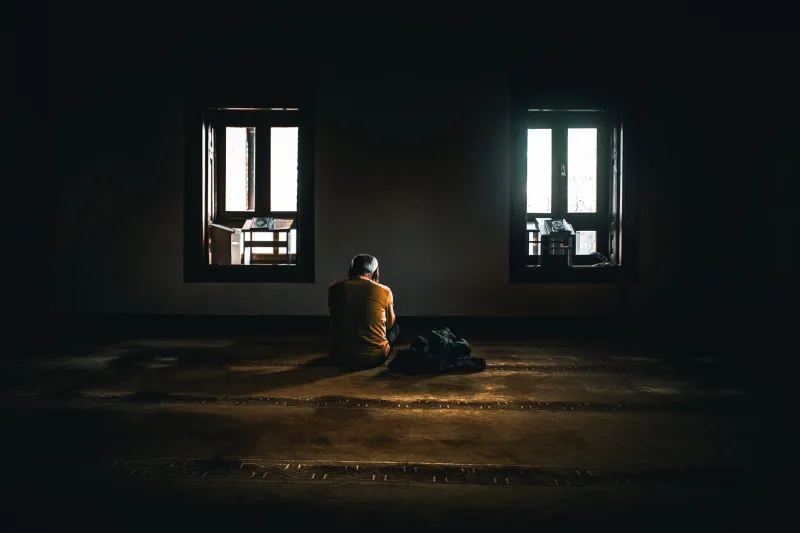
Willingness to sustain discomfort. The monk's cell is not always peaceful. There are nights of spiritual aridity, mornings of profound resistance, hours in which the absence of distraction feels less like freedom than like exposure. Genuine simplicity does not resolve this discomfort. It creates the conditions in which the practitioner must face it rather than flee it.
Practical Guidance for the Contemplative Householder
None of this is to suggest that those outside monastic walls cannot practice meaningful simplicity. They can, and many do. But the practice requires honest self-examination about motivation.
Begin not with the room but with the question. Before removing objects from your living space, ask what you hope the removal will accomplish. If the answer is primarily aesthetic or social — a cleaner look, a more impressive home — that is useful information. It does not mean the project is worthless, but it does mean it is not yet a contemplative practice.
Consider introducing a simple daily rhythm before altering your physical environment at all. The canonical hours, adapted for secular life, offer one model: brief, intentional pauses at fixed points throughout the day that interrupt the momentum of productivity and return attention to the present. This kind of temporal simplicity — clearing the schedule rather than the shelf — is often more demanding, and more transformative, than any rearrangement of furniture.
If you do wish to simplify your physical environment, do so slowly and with attention to what each object's removal reveals about your attachment to it. The discomfort of that process is not a sign that you are doing it wrong. It is the practice itself.
Finally, seek some form of accountability. A meditation teacher, a contemplative reading group, a trusted friend committed to similar inquiry — any of these can provide the communal dimension that keeps simplicity from becoming merely another form of self-expression.
The Deeper Invitation
The monk's cell has something genuine to offer a culture exhausted by accumulation and overstimulation. But what it offers is not a look. It is a question — one that the whitewashed walls have been asking for centuries, and that no amount of interior design can answer on our behalf.
The question is this: When everything unnecessary has been removed, what remains? And are you willing to be present to it?
That is not a question that can be resolved with linen and pale wood. It requires the one thing that no luxury market can supply: the willingness to sit in genuine emptiness, without performance, and discover what is actually there.