Sleeping in Two Watches: What Monastic Night Offices Reveal About Our Broken Relationship with Rest
Somewhere between your third night of staring at a sleep score on your wrist and your fourth consecutive morning of exhaustion despite eight hours logged, a question worth sitting with emerges: what if we have fundamentally misunderstood what rest is for?
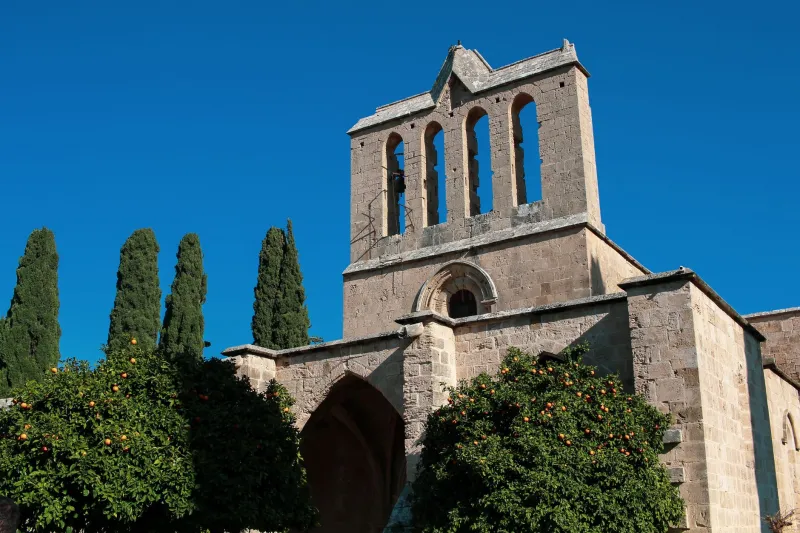
The medieval monastery offers an unlikely answer. Across centuries of contemplative practice, monastic communities developed a relationship with sleep that was neither casual nor anxious — it was liturgical. Rest was not a performance metric. It was a sacred rhythm, woven into the fabric of daily life with the same intentionality applied to prayer, labor, and silence.
What those communities understood intuitively, and what modern sleep science is only beginning to confirm, is that the human body does not want a single, unbroken block of unconsciousness. It wants something older, stranger, and far more interesting.
The Two-Sleep Pattern and the Night Office
Historian Roger Ekirch's landmark research into pre-industrial sleep patterns revealed that, for most of human history, people across many cultures slept in two distinct phases — a "first sleep" lasting roughly four hours, a period of quiet wakefulness in the middle of the night, and then a "second sleep" until dawn. This segmented pattern was not insomnia. It was the norm.
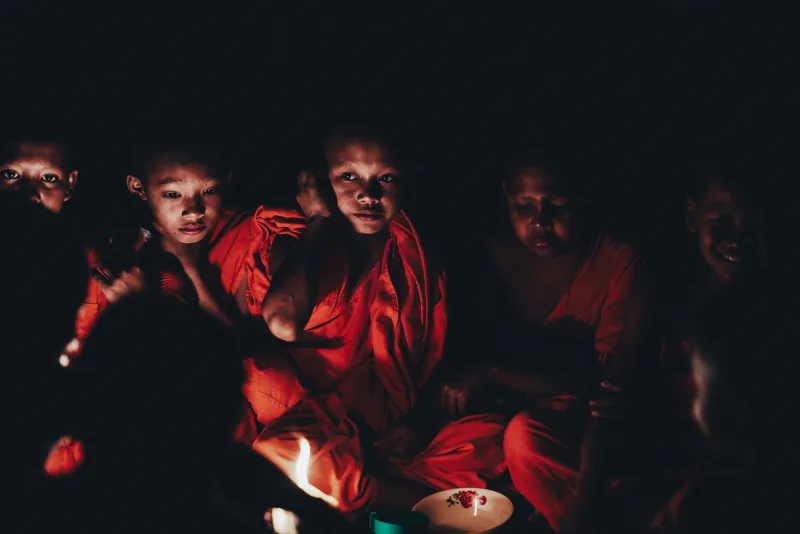
Monastic communities did not stumble upon this pattern by accident. They institutionalized it. The Rule of Saint Benedict, written in the sixth century and still guiding monastic life in communities across the United States today, prescribed the Divine Office — a cycle of communal prayer observed at fixed hours throughout the day and night. The night office, known as Vigils or Matins depending on the tradition, called monks to rise in the small hours, typically around two or three in the morning, for prayer and scripture reading before returning to rest.
This was not a disruption of sleep. It was, from the monastic perspective, a participation in sacred time — the hours when the world was quiet and the spirit most receptive. The fact that it also aligned with a natural biological rhythm was, perhaps, not coincidental at all.
What the Wearable Cannot Measure
The American sleep industry is worth billions of dollars. Mattress technology, white noise machines, blackout curtains, sleep-tracking rings, cognitive behavioral therapy apps — the market for better rest expands each year even as reported rates of insomnia and sleep dissatisfaction remain stubbornly high. Something is not adding up.
Part of the problem may be the framework itself. Contemporary sleep culture treats rest as a problem of optimization: maximize deep sleep percentage, minimize awakenings, hit the target number. The monk would recognize this as a category error. You cannot optimize your way into genuine restoration any more than you can schedule your way into genuine prayer.
Monastic rest was embedded in a larger context of meaning. Monks slept well — when they did — not because they had superior mattresses, but because their days were structured around rhythm, purpose, and the deliberate alternation of activity and stillness. The body, it turns out, responds to coherence. When the architecture of a day makes sense — when work, prayer, meals, and rest follow a predictable and meaningful sequence — the nervous system settles into it.
Seasonal Sleep and the Wisdom of Variation
Benedictine schedules were not static. The Rule explicitly adjusted the timing of prayer and rest according to the season. In winter, when nights were long, monks slept more and rose later. In summer, the schedule compressed. The monastery breathed with the natural world rather than imposing a fixed template upon it.
This seasonal attunement stands in sharp contrast to the modern American expectation of identical sleep schedules year-round, maintained through artificial lighting and climate control regardless of what the sun is doing. Light-dark cycles regulate the circadian system with extraordinary precision, and when we override them consistently, the body registers the conflict even when the mind does not.
The monastic response to this conflict was not a supplement. It was architecture — both physical and temporal. Monasteries were designed to receive natural light in ways that reinforced the daily rhythm. Schedules shifted with the solstice. The community moved together through time rather than each member fighting their biology in isolation.
The Afternoon Rest as Spiritual Technology
Many monastic traditions also preserved the practice of a midday or early afternoon rest — a brief withdrawal from labor that corresponded to the post-lunch dip in alertness that chronobiologists now recognize as a genuine feature of human physiology. In Mediterranean monastic culture, this was formalized. In Benedictine communities in warmer climates, a period of silence and rest following the midday meal was built into the Rule.
This is not laziness institutionalized. It is wisdom encoded. The body's alertness follows a biphasic pattern across the day, and the early afternoon trough is real. Attempting to power through it with caffeine — the default American response — suppresses adenosine temporarily while disrupting the evening sleep pressure that makes genuine rest possible later.
The monk did not fight the afternoon. He yielded to it, briefly, and returned to the afternoon's work restored rather than depleted.
Toward a Less Anxious Rest
None of this requires adopting a monastic schedule or rising at two in the morning to pray. What the contemplative tradition offers is not a program but a posture — a way of relating to rest that is less driven by fear of inadequacy and more rooted in trust of the body's own intelligence.
If you wake in the night and cannot immediately return to sleep, the monastic framework suggests this may not be pathology. It may be an invitation — to lie quietly, to breathe, to allow the mind to move gently through the half-lit space between waking and sleep. Historically, this was a time for reflection, for prayer, for the kind of loose, associative thinking that the pressured daytime mind rarely permits.
The sleep tracker on your wrist cannot measure what happens in that space. But something real may be occurring there nonetheless.
The monks knew that rest was not the absence of wakefulness. It was the presence of peace. That distinction, quiet as it is, may be the most useful thing the cloister has to offer a nation that is exhausted and cannot figure out why.