Undocumented Lives: What Monastic Traditions Reveal About the Hidden Cost of Constant Recording
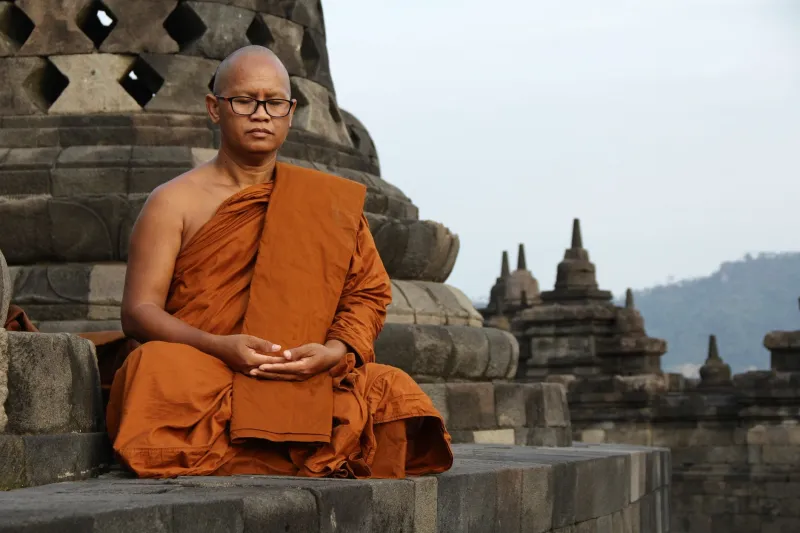
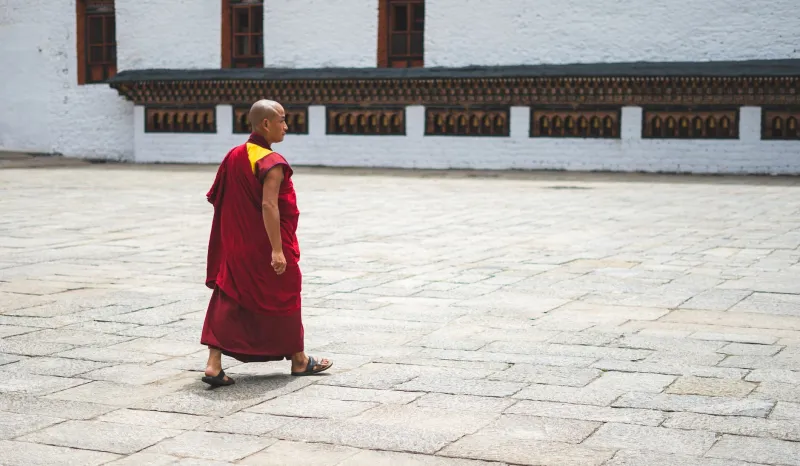
There is a small but telling detail that visitors to contemplative monasteries often notice upon arrival: the monks do not reach for their phones. Not when the light falls beautifully across the chapel floor. Not when a rare bird lands in the cloister garden. Not when a brother laughs in a way that seems worth preserving. The moment arrives, is received fully, and then passes — unrecorded and, in the truest sense, unrepeatable.
To the average American tourist, this restraint can appear almost ascetic in its own right, a sacrifice layered atop the more obvious ones of silence, celibacy, and simplicity. But to the monk, the camera's absence is not a sacrifice at all. It is a condition of genuine encounter. You cannot fully inhabit a moment you are simultaneously converting into an artifact.
The Monastery as a Camera-Free Zone — Long Before It Was Fashionable
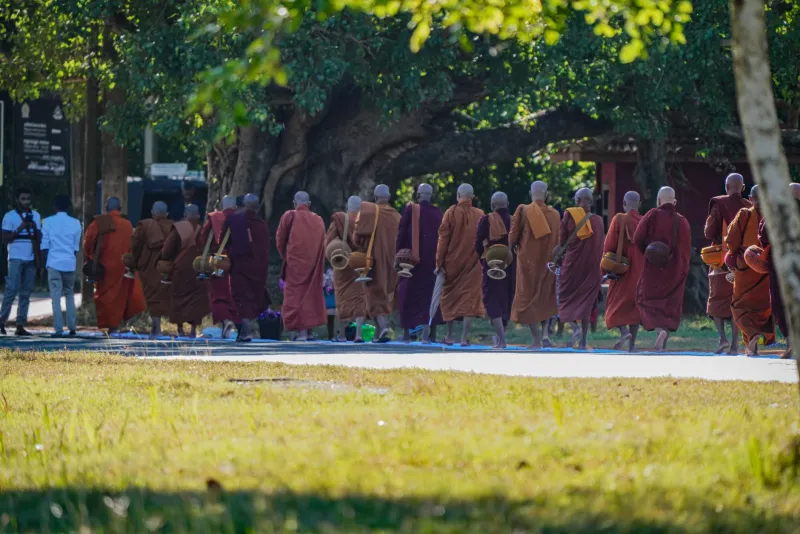
Monastic communities did not arrive at their undocumented way of life through a deliberate policy debate. There was no chapter meeting at which abbots resolved to ban photography. The practice is far older than the technology. What monastic traditions cultivated over centuries was a particular quality of attention — one that treated experience as an end in itself rather than as raw material for later review.
In the Benedictine tradition, the concept of conversatio morum — the ongoing conversion of one's manner of life — places enormous weight on the present moment as the primary site of spiritual transformation. The monk is not preparing for a future accounting of his days. He is living them, completely, now. The canonical hours do not exist so that the monk may later reflect on how structured his week was. They exist to make each segment of the day fully inhabitable, fully sacred, as it unfolds.
This is a fundamentally different relationship with time than the one most Americans maintain. We tend to live in a kind of anticipatory mode, half-experiencing the present while already imagining how we will represent it to others — or to our future selves. The photograph, the Instagram story, the quick video clip: each of these is a small act of temporal displacement, a partial exit from the now.
What Neuroscience Has Begun to Confirm
Researchers at institutions including Fairfield University have conducted studies examining what has come to be called the "photo-taking impairment effect." The findings are disquieting for anyone who has spent a vacation behind a lens. Participants who photographed objects in a museum setting remembered significantly fewer details about those objects than participants who simply observed them. The act of outsourcing memory to a device appears to diminish the cognitive engagement required for genuine retention.
This is not merely a finding about photographs. It points toward something deeper about the nature of attention itself. When the mind knows that an external record is being made, it relaxes its own encoding processes. Why labor to remember what the machine will hold? The result is an experience that feels documented but is, in the most important sense, not truly remembered — not integrated into the self in the way that only sustained, undivided attention permits.
Monks, without access to this research, arrived at the same conclusion through practice. The discipline of full presence was not merely a spiritual ideal. It was a technology of memory — one that worked precisely because it demanded everything the practitioner had.
The Archive That Impoverishes
There is a particular irony embedded in contemporary documentation culture. We record more of our lives than any previous generation in human history, and yet many Americans report feeling that their days blur together, that time accelerates, that they struggle to recall specific textures and details from even recent months. The archive grows; the felt sense of having lived diminishes.
This is not coincidental. Memory, as neuroscientists understand it, is not a passive recording system. It is an active, constructive process that depends on emotional engagement, sensory immersion, and — critically — the absence of distraction. Each time we interrupt an experience to document it, we fragment the very attentional coherence that would allow the experience to be deeply encoded.
Monastic communities understood implicitly that a life richly remembered is not a life richly photographed. It is a life richly attended to. The monk who sits in silence during compline, who notices the quality of the candlelight and the texture of the chant, who allows grief or gratitude or simple tiredness to move through him without deflection — that monk carries those evenings forward in a way that no photograph could approximate.
Reclaiming Contemplative Memory in Everyday Life
For those of us embedded in American consumer culture, the monastic example does not demand the immediate abandonment of our devices. It offers something more subtle and, perhaps, more challenging: a question about why we reach for the camera at the moments we do.
Often, the impulse to document is not primarily about memory at all. It is about validation — the desire to make an experience legible to others, to confirm through external acknowledgment that something beautiful or meaningful has occurred. This is, at its root, a failure of confidence in one's own perception. The monk who watches the sunrise without photographing it is not indifferent to its beauty. He is trusting himself to receive it.
Several practical disciplines emerge from this contemplative framework:
Arrive before the device. When entering an experience — a meal, a walk, a conversation — commit to a period of undivided presence before any documentation occurs. Even five minutes of unmediated attention reshapes what the mind retains.
Practice selective documentation. Rather than photographing reflexively, pause and ask whether the image will add to or subtract from your experience of the moment. Intentional documentation, chosen rather than compulsive, carries a fundamentally different relationship to presence.
Keep a written journal. The monastic tradition of the examen — a daily review of conscience and experience — offers a model for memory that is active and reflective rather than passive and archival. Writing about an experience requires reconstructing it from within, which is precisely the cognitive work that deepens retention.
Designate undocumented time. Choose particular contexts — Sunday mornings, dinner with family, time in nature — as camera-free by personal rule. Not as punishment, but as a deliberate gift of full attention to those experiences.
What We Are Actually Protecting
The deepest insight embedded in monastic practice is not that photographs are harmful or that documentation is inherently corrupt. It is that presence is finite. Attention is a resource, and its allocation is, ultimately, a statement of values.
When a monk refuses to photograph the cherry blossoms in the monastery garden, he is not being indifferent to beauty. He is honoring it by refusing to convert it into content. He is saying, in effect: this moment deserves my full self, not the divided attention of someone already composing a caption.
In a culture that has monetized attention and commodified memory, that refusal carries weight. It is a small act of reclamation — an insistence that some things remain interior, personal, lived rather than displayed.
The contemplative traditions did not preserve this discipline because they lacked the means to document their lives. They preserved it because they understood, with a clarity that modern neuroscience is only now articulating, that the self capable of genuine memory is the self that was genuinely there.
The camera can keep the image. Only you can keep the experience.